Dubai Property vs Turkey, Canada & UK: The Ultimate Winning Choice in 2026
 Ramtin
Dubai’s real estate market is drawing attention from buyers who previously considered Turkey, Canada and the UK. Their reasons vary. Some want stronger rental income, while others are looking for a different currency environment, lower local ownership costs, broader purchasing options or a route to long-term residency.
That makes a simple question such as “Which market is better?” difficult to answer.
The more useful comparison is financial. Purchase price is only one part of the calculation. Taxes, financing, maintenance, vacancy, management fees and currency movements can all change the final return.
Turkey, Canada and the UK each have established housing markets, but they offer very different conditions for overseas buyers. The UAE provides another combination: foreign ownership in designated freehold areas, a dirham pegged to the US dollar, a large expatriate population and an active rental sector.
None of these advantages guarantees a profit. Prices can decline, new supply can increase competition, and a strong gross yield may look much less impressive after expenses.
For someone considering an international property purchase in 2026, the better question is not whether one country can replace another. It is whether the characteristics of each market fit the buyer’s financial objectives.
Istanbul and other Turkish cities have attracted international buyers for years. Relatively accessible prices, Turkey’s location and citizenship-related programs have supported overseas demand.
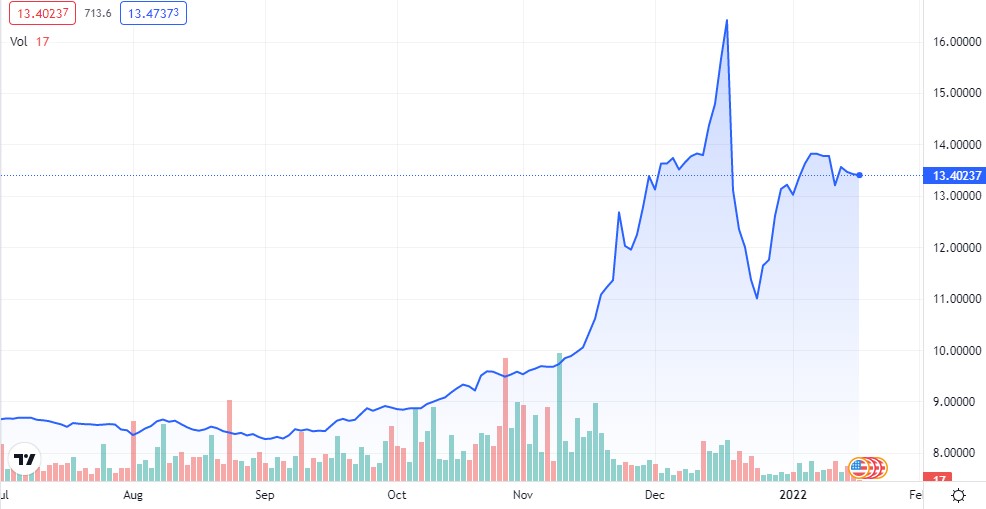
The calculation becomes more complicated when returns are converted into dollars or euros.
Turkey has experienced substantial inflation and depreciation of the Turkish lira. A home can rise considerably in lira terms while producing a much smaller gain when measured against a stronger foreign currency.
For an overseas buyer, that distinction matters.
The UAE dirham operates under a different monetary framework. Its peg to the US dollar reduces exchange-rate exposure for investors holding real estate in a market where the domestic currency is depreciating.
This does not remove other risks. A buyer can still overpay, face weak rental demand or experience a decline in local prices. Currency stability simply takes one additional source of uncertainty out of the calculation.
The ownership structure creates another point of comparison.
At the local property level, Dubai does not impose an annual property tax or capital gains tax in the conventional sense. That can affect the economics of holding an income-producing asset.
Ownership is not cost-free, however.
Registration charges, service fees, maintenance, agency commissions, financing and other transaction expenses all reduce the amount ultimately retained. A quoted yield should therefore be treated as a starting point rather than the final return.
An overseas purchase involves more than choosing a building. Buyers need to understand the rules covering ownership, registration, leasing and residency.
The Dubai Land Department (DLD) oversees registration, while RERA operates within the emirate’s regulatory framework. Foreign nationals can purchase qualifying properties in designated freehold areas.
Off-plan purchases require additional attention. Buyers should understand project escrow arrangements and the difference between property registration and tenancy-related systems before signing a contract.
Residency can also influence the decision. The information used for this comparison identifies AED 2 million as the property investment threshold associated with the 10-year UAE Golden Visa pathway. Requirements can change, so buyers purchasing partly for residency should verify the current rules before committing funds.
It would be too simplistic to label one country “safe” and another “risky.”
Turkey may still suit someone looking for a holiday home, a residence near the Mediterranean or a long-term personal base. Those objectives can justify accepting a different currency and market profile.
The calculation is different for someone whose main concern is preserving capital in a US-dollar-linked environment or generating rental income.
Personal use and financial performance should also be separated.
A buyer purchasing for lifestyle reasons may accept a lower yield or greater currency exposure. Someone building a portfolio is more likely to focus on net income, liquidity, operating expenses and potential changes in property value.
| Investment factor | Dubai | Turkey |
|---|---|---|
| Currency | UAE dirham pegged to the US dollar | Turkish lira with significant historical volatility |
| Inflation exposure | Closely linked to the USD monetary framework | Higher exposure to domestic inflation |
| Foreign ownership | Available in designated freehold areas | Subject to Turkish ownership regulations |
| Rental market | Large expatriate and international tenant base | Strong variation by city and location |
| Tax environment | No annual local property tax or local capital gains tax at the property level | Various taxes and transaction obligations can apply |
| Liquidity | Strong international participation | More dependent on domestic and foreign demand |
The comparison therefore comes down to priorities. Currency exposure may dominate the decision for one buyer, while entry price, personal use or long-term growth may matter more to another.
Toronto and Vancouver remain major Canadian housing markets, supported by established economies, employment opportunities and strong domestic demand.
For landlords, however, the relationship between acquisition cost and rent can be challenging.
High purchase prices, mortgage qualification requirements, borrowing costs, property taxes and other expenses can reduce cash flow. Rent-control rules in Ontario and British Columbia can also affect how quickly landlords can adjust rents in qualifying situations.
Foreign-buyer restrictions and vacant-home measures add another layer of complexity for some purchasers.
The useful question is therefore not simply where homes cost more. It is how much income a given amount of capital can produce after expenses.
Price-to-rent ratios are particularly relevant.
A home can appreciate substantially over a long period while producing relatively little annual income. When acquisition prices rise faster than achievable rents, the yield becomes compressed.
The figures used here place typical Canadian residential net yields around 2% to 4%, while selected Dubai communities can produce higher gross yields.
These are broad market ranges rather than guarantees. The result for an individual unit depends on its purchase price, financing, vacancy, service charges, maintenance and management costs.
Canadian buyers also need to consider their own tax position. Purchasing an overseas property does not automatically remove obligations in the investor’s home country.
Local taxation is one reason the two markets are often compared.
There is no annual property tax or local capital gains tax charged at the property level in the conventional Canadian sense. Foreign buyers can also own qualifying assets in designated freehold districts.
Rental regulation is another part of the calculation. RERA and DLD provide frameworks for leasing and transactions, including mechanisms relevant to permissible rent adjustments.
A more useful measure is:
Net income = rent minus service charges, maintenance, vacancy, management, financing and applicable taxes.
That figure tells a buyer more than a headline percentage shown in a project advertisement.

There is no single investment profile across the city.
A waterfront residence on Palm Jumeirah serves a very different market from a one-bedroom apartment in Jumeirah Village Circle. An off-plan development in Dubai South also comes with a different payment structure, timeline and risk profile.
Price is only the starting point. Tenant demand, service charges, future supply, building quality and the expected holding period can change the result considerably.
The first decision should therefore be the purpose of the purchase: income, appreciation, liquidity, personal use, or a combination of these objectives.
Business Bay sits close to Downtown Dubai and the Dubai Canal and combines residential towers with a large commercial district.
Its tenant base includes professionals working in central parts of the city, which makes smaller apartments relevant to rental-focused strategies.
Estimated ROI is approximately 6.5% to 8.2%, while prices range from around AED 1.2 million to AED 4.5 million, depending on the unit.
Those figures are not guarantees. Building quality, service charges, floor level, views, layout and transport access can all affect the actual result.
For buyers seeking a central location with access to a broad tenant pool, Business Bay remains worth examining.
Dubai Hills Estate attracts a different type of buyer.
The master-planned community developed by Emaar combines residential projects with parks, a golf course, schools, retail facilities and Dubai Hills Mall.
Estimated ROI is around 5.5% to 7.0%. Apartment prices start at approximately AED 1.8 million, while larger villas can reach substantially higher levels.
The main attraction is not necessarily the highest annual yield.
Family demand, infrastructure and the area’s longer development story may matter more to someone focused on appreciation. A buyer whose priority is maximum rental income could reasonably choose another location.
Jumeirah Village Circle, commonly known as JVC, is one of the more accessible residential communities for buyers working with a mid-range budget.
Relatively lower entry prices and a broad tenant base have helped establish it as an active rental location.
Estimated ROI ranges from approximately 7.5% to 9.5%, with prices around AED 600,000 to AED 1.6 million.
There is an important qualification. New construction can support population growth, but it also adds competing units.
Before relying on an area-wide average, buyers should examine future supply, individual building quality, service charges and achievable rent.
Dubai South represents a longer-term development proposition.
The district is connected to Al Maktoum International Airport, Expo City and the wider expansion of southern Dubai.
Estimated ROI is approximately 7.0% to 8.5%, with prices between AED 500,000 and AED 2.2 million.
Part of the investment case depends on future infrastructure and population growth, so the holding period matters.
Someone looking for immediate capital appreciation may have a very different experience from a buyer prepared to hold for five or ten years while the surrounding infrastructure develops.
Dubai Creek Harbour occupies a more premium waterfront position.
The development is being shaped as a major residential and mixed-use district, with Emaar involved in its development.
Estimated ROI is approximately 5.8% to 7.2%.
At this end of the market, long-term demand for waterfront residences and potential appreciation may matter more than achieving the highest possible rental percentage.
Palm Jumeirah is firmly positioned within the luxury residential segment.
Its limited land supply, international profile and concentration of high-value residences make it relevant to high-net-worth buyers and holiday-home investors.
Estimated ROI is approximately 5.0% to 6.8%, with potentially stronger results from short-term rentals.
Higher entry prices and operating costs form part of the trade-off.
For this type of purchase, investors should look at absolute rental income, occupancy, management expenses and resale demand rather than focusing only on the percentage yield.

The reasons vary depending on the buyer’s home market.
UK buyers may compare the cost structure of London and other major British cities with the UAE.
Stamp Duty Land Tax, financing expenses and the treatment of rental income can materially affect returns in Britain.
Currency exposure is another consideration. The dirham’s peg to the US dollar creates a different monetary environment from sterling.
Neither market is automatically better. The important point is that the risks and potential returns are structured differently.
For Canadians, purchase price, rental income, taxation and regulation are likely to be central considerations.
Toronto and Vancouver can require substantial capital, while rental yields may remain relatively modest compared with acquisition costs.
The UAE offers a wider range of entry points across different communities and price segments.
Canadian buyers should still assess how rental income, gains and overseas assets are treated under domestic tax rules.
Currency exposure is likely to be one of the main considerations for buyers from Turkey.
Moving part of a portfolio into a market whose currency is pegged to the US dollar can provide diversification away from the Turkish lira.
That does not eliminate risk. Transfer costs, financing, rental income, taxes in both jurisdictions and the expected holding period still need to be considered.
Iranian purchasers can face additional practical issues when buying internationally, including payment channels, compliance requirements, ownership structures and access to financial services.
Dubai’s geographic proximity and its role as an international business center can make it relevant to buyers from the region.
Cross-border banking and sanctions-related requirements should be assessed individually with appropriate professional advice. They should not be assumed to be identical for every buyer.
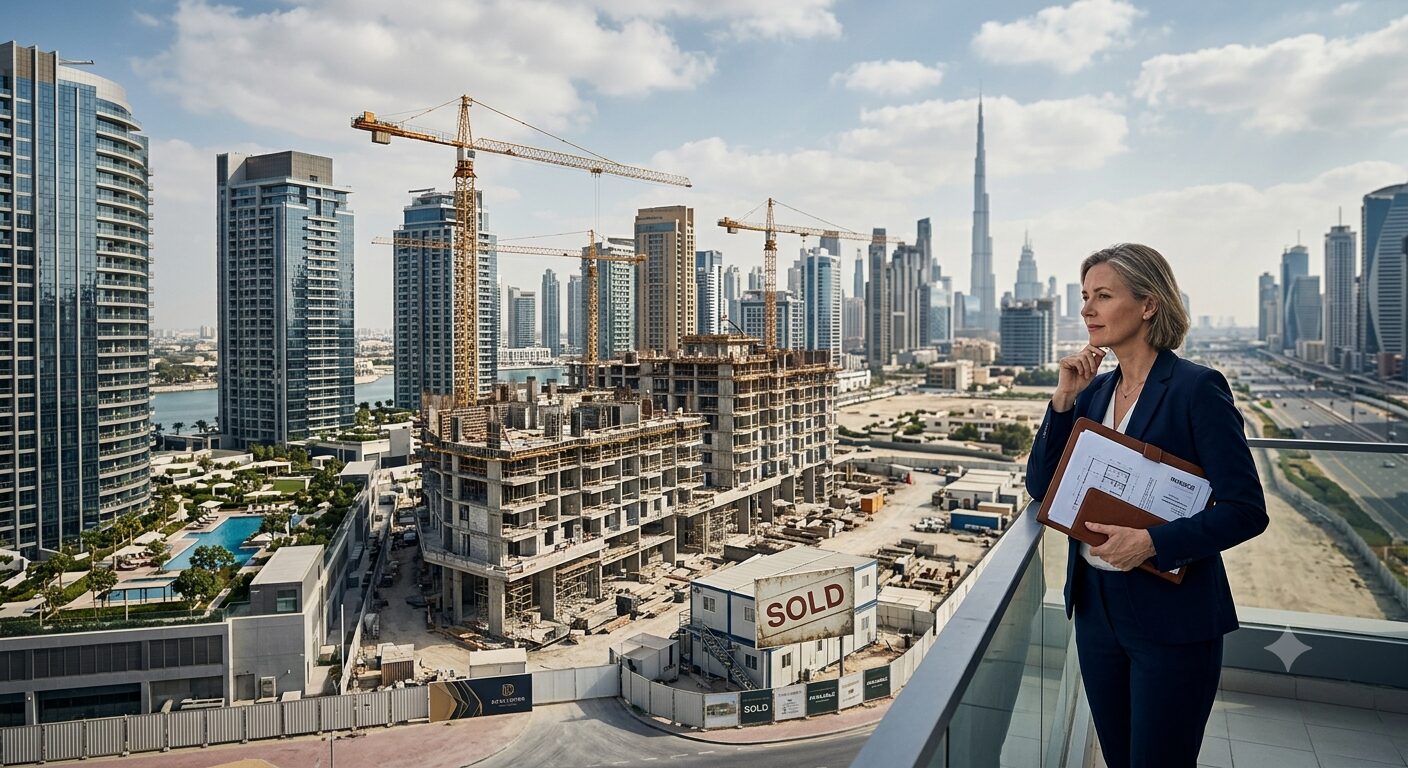
A strong rental yield or flexible payment plan does not remove the normal risks associated with residential assets.
Off-plan buyers should examine previous projects, delivery history, construction quality and the developer’s financial track record.
A recognizable name is not enough. The specific development still needs to be assessed on its own merits.
Additional inventory can affect both rents and resale prices.
This is especially relevant in rapidly expanding communities. A building may have strong tenant demand today, but several competing developments entering the market can give renters more choices.
The supply pipeline should therefore form part of the purchase decision.
Service charges can materially change the final return.
A unit advertised with an attractive gross yield may produce a much smaller net figure once building charges, maintenance, management and vacancy are deducted.
The calculation should begin with realistic annual rent and account for the costs required to operate the unit.
Off-plan purchases can offer staged payment schedules and the possibility of appreciation before completion.
The risk becomes more obvious when the buyer intends to resell before handover.
If market conditions change, the expected exit may no longer be available. Buyers should have sufficient liquidity to continue with the purchase and hold the asset if necessary.

Buying from overseas involves more than selecting an apartment.
HomeFinder Global helps international buyers compare communities, developments and purchasing strategies across Dubai. The starting point should be the buyer’s financial objective rather than the development receiving the strongest marketing campaign.
Someone focused on rental income may prefer communities such as JVC, Arjan or Business Bay.
A buyer with a longer appreciation horizon may look more closely at Dubai Hills Estate, Dubai South or Dubai Creek Harbour.
A luxury buyer has a different set of considerations, including location, scarcity, tenant profile, operating costs and resale demand.
There is no reason for every buyer to choose the same type of asset.
HomeFinder Global works with major developers including Emaar, Nakheel, Sobha, Binghatti and Select Group.
For someone considering an off-plan purchase, access to multiple developments makes it easier to compare payment schedules, completion dates, locations, service charges and potential rental demand.
A project brochure should be the beginning of the comparison, not the end.
International buyers may also need help with registration, transaction procedures, financing coordination, residency applications and property management after handover.
The services required will depend on the buyer’s nationality, property, financial structure and intended use.

There is no universal answer.
The UAE may appeal to buyers who prioritize rental yield, a US-dollar-linked currency and a different local tax structure. London remains a deep and established market with significant international demand.
A meaningful comparison should include acquisition costs, net rental income, taxes, financing, expected appreciation and the buyer’s home-country tax position.
Yes. Foreign nationals can purchase freehold properties in designated areas.
The ownership classification of the specific unit should be confirmed before signing. Registration is handled through the Dubai Land Department, and buyers should review the complete transaction structure before committing funds.
The comparison usually comes down to capital requirements, rental income, taxation and regulation.
Toronto and Vancouver can require substantial investment capital while producing relatively modest rental yields. The UAE offers properties across a broader range of price points and does not impose annual local property taxes or local capital gains tax at the property level in the conventional sense.
Canadian buyers still need to account for domestic tax obligations.
No. That description is too broad.
There is no annual local property tax or local capital gains tax charged at the property level in the conventional sense. Buyers still face registration charges, service fees, maintenance costs, agency commissions and other transaction expenses.
Tax obligations in the buyer’s home country may also continue to apply.
Yields vary considerably by location, property type, purchase price and leasing strategy.
The figures used in this article place typical yields across the city in a broad range of approximately 6% to 9%.
These should be treated as indicative gross figures rather than guaranteed net returns. Vacancy, maintenance, service charges, management and financing can reduce the amount ultimately received.
The information used here identifies AED 2 million as the property investment threshold associated with the 10-year Golden Visa pathway.
Eligibility requirements can change and may depend on the applicant’s circumstances. Anyone purchasing primarily for residency should verify the current rules with the relevant UAE authorities or a qualified adviser.
That depends on the type of risk being measured.
The dirham’s US-dollar peg reduces currency volatility compared with the Turkish lira. This can be important for buyers who measure their wealth in dollars.
Property prices can still fluctuate in both markets. Supply, interest rates, tenant demand and wider economic conditions continue to affect individual assets.
JVC, Arjan, Business Bay and Dubai South are among the locations identified in this comparison as having relatively strong rental-yield potential.
The highest percentage does not necessarily represent the best purchase. A unit with a slightly lower yield but stronger liquidity, lower service charges or more consistent tenant demand may deliver a better overall result.
For completed units, buyers should allow roughly 6% to 7% of the purchase price for upfront costs based on the figures used in this comparison.
These may include DLD registration, trustee or administrative charges, agency commission and legal or conveyancing expenses.
The exact amount depends on the transaction, so a detailed cost schedule should be obtained before signing.
The answer depends on the intended strategy.
Off-plan developments can offer staged payment schedules and the possibility of appreciation during construction. They may suit buyers with a longer horizon and sufficient liquidity to handle construction and market risk.
A completed unit can generate rental income sooner because it is already available for occupation, assuming it is suitable for the rental market.
Someone seeking immediate cash flow may prefer a completed property, while a buyer focused on staged capital deployment may consider an off-plan purchase.
The case for Dubai becomes clearer when the comparison starts with actual financial objectives rather than broad claims about which country is “better.”
Turkey offers a different currency and inflation environment. Canada has established housing markets but can combine high acquisition costs with relatively modest rental yields. The UK provides deep liquidity and international demand, alongside its own tax and regulatory framework.
The dirham is pegged to the US dollar. Foreign ownership is available in designated freehold areas. Some communities offer relatively high rental yields, while others are more focused on long-term appreciation, waterfront demand or established residential infrastructure.
Someone focused on monthly income may reach a different conclusion from a buyer seeking long-term appreciation. A luxury purchaser may care more about scarcity and resale demand than about achieving the highest percentage yield. Someone concerned about currency exposure may place greater importance on the relationship between the dirham and the US dollar.
The final decision should come down to the individual asset and the numbers behind it: entry price, achievable rent, operating costs, financing, future supply, liquidity and the intended holding period.
Dubai is not a universal replacement for Turkey, Canada or the UK. It is a different proposition. For buyers whose objectives align with its particular characteristics, that difference may be the reason to consider it in 2026.
Contents